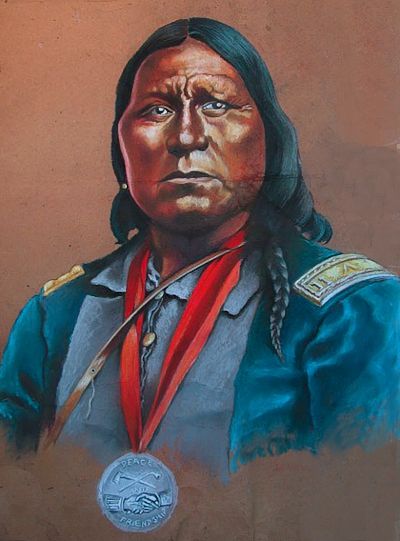
Ute

Two Strike (Nomkahpa), Sioux

The name of Two Strike is a deed name. In a battle with the Utes this man knocked two enemies from the back of a war horse. The true rendering of the name Nomkahpa would be, “He knocked off two.” It is a pity that so many interesting names of well-known Indians have been mistranslated, so that their meaning becomes very vague if it is not wholly lost. In some cases an opposite meaning is conveyed.Continue to Two Strike (Nomkahpa),…

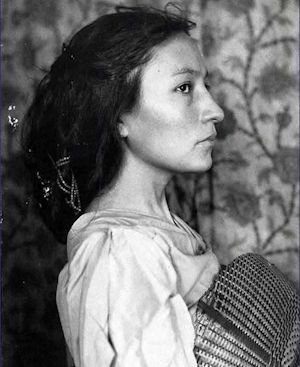
Read MoreTwo Strike (Nomkahpa), Sioux

Dohasan, last Principal chief of the Kiowa

Kiowa chief Dohasan

Dohasan is the hereditary name of a line of chiefs of the Kiowa for nearly a century. It has been borne by at least four members of the family.

The first of whom there is remembrance was originally called Pá-do‛gâ′-i or Padó‛gå, ‘White-faced-buffalo-bull’, and this name was afterward changed to Dohá, or Doháte. He was a prominent chief.

His son was originally called Ä′anoñ′te (a word of doubtful etymology), and afterward took his father’s name of Doháte, which was changed to

Dohasan, Little Doháte, or Little-bluff, for distinction.

He became a great chief, ruling over the whole tribe from 1833 until his death on Cimarron River in 1866.

Continue to Dohasan, last Principal chief of the Kiowa →

Read MoreDohasan, last Principal chief of the Kiowa

Satanta, Kiowa Chief

Portrait of Kiowa War Chief, Santana

Satanta's (often misspelled as Santana) name actually was Set-tainte, which means White Bear Person. One of the leading Kiowa chiefs in the 1860s and '70s, Satanta was a fearsome warrior, but also a skilled orator and diplomat. Satanta negotiated numerous times with the American government and signed such treaties as the Little Arkansas (1865) and Medicine Lodge (1867). He fought a protracted war to protect his tribe's land before settlers, miners and others finally overwhelmed it.

Continue to Satanta, Kiowa Chief →

Read MoreSatanta, Kiowa Chief