Red Cloud

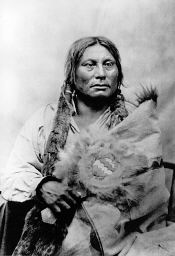
Rain-in-the-Face (Itonagaju), Hunkpapa Sioux

Hits: 5557 The noted Hunkpapa Sioux warrior, Rain-in-the-Face, (Ité Omáǧažu or Itonagaju), whose name once carried terror to every part of the frontier, died at his home on the Standing Rock reserve in North Dakota on September 14, 1905. About two months before his death I went to see him for the last time, where he lay upon the bed of sickness from which he never rose again, and drew from him his life-history.Continue to Rain-in-the-Face (Itonagaju), Hunkpapa Sioux →
Read MoreRain-in-the-Face (Itonagaju), Hunkpapa Sioux

Chief Hump, Minniconjou Lakota

Etokeah
Chief Hump
Minniconjou Lakota
(ca. 1848-1908)

Etokeah, a Minniconjou Lakota war chief, known to the whites as Chief Hump,  was a great leader. He is especially known for his skills during the 19th Century Lakota-US Government battles. His exact birth date and facts of parentage were not recorded. However, he first came into public notice in 1866. Then, he led the charge against Captain William Fetterman’s soldiers outside Fort Phil Kearney in Wyoming.

Continue to Chief Hump, Minniconjou Lakota →

Read MoreChief Hump, Minniconjou Lakota

Charles Eastman’s account of Chief Sitting Bull

The following is Charles Eastman’s account of Chief Sitting Bull. If the Great Spirit had desired me to be a white man he would have made me so in the first place. He put in your heart certain wishes and plans, and in my heart he put other and different desires. It is not necessary for eagles to be crows. –Sitting Bull, Hunkpapa Sioux It is not easy to characterize Sitting Bull, of all Sioux chiefs most generally known to…

Read MoreCharles Eastman’s account of Chief Sitting Bull

Shoshone Chief Washakie (Whoshakik): A Biographical Sketch

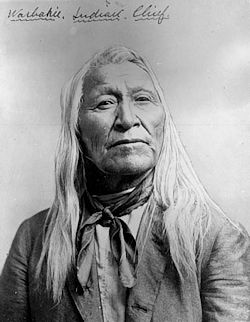
Shoshone Chief Washakie

For most modern Wyoming residents and many historians of the American West, the names of Chief Washakie, the Shoshone Indians, and the Wind River Reservation seem inseparable. Yet, it was not always so. The Eastern Shoshone band of American Indians, for whom the Wind River Reservation was created by the Fort Bridger Treaty of 1868, represents an amalgam of various bands of Shoshone and Bannock peoples, most of whom originate from Nevada, Utah, and Idaho, not Wyoming.

Washakie, the best-known leader of the Eastern Shoshones in the latter part of the 19th century, is still considered by some Shoshones as an outsider because he was not a full-blood Shoshone.Indeed, Washakie was of mixed tribal heritage.Continue to Shoshone Chief Washakie (Whoshakik): A Biographical Sketch →

Read MoreShoshone Chief Washakie (Whoshakik): A Biographical Sketch